Ajay Bohra
Last updated: May 2026 · Educational article — not investment advice. See our disclaimer.
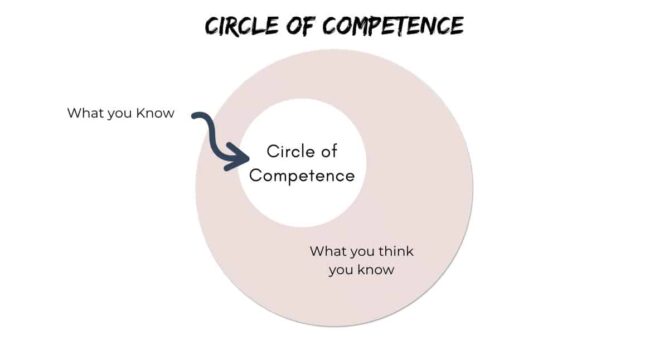
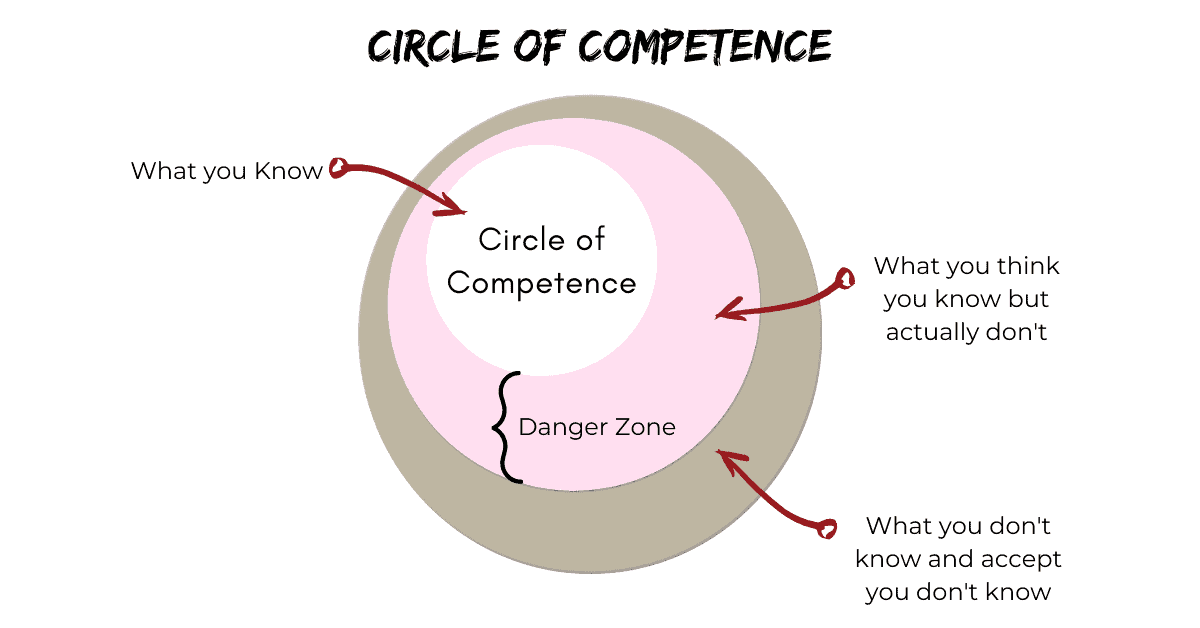
Your circle of competence is the set of businesses, sectors, and decisions you truly understand well enough to judge risk. Warren Buffett and Charlie Munger popularised the idea for investors: stay inside what you know, and be honest about what you do not.
Quick summary
| Concept | Plain meaning |
|---|---|
| Inside the circle | You can explain how the business makes money and what could break it |
| Outside the circle | You are guessing from headlines, tips, or hype |
| Extend the circle | Learn slowly — do not confuse curiosity with expertise |
| For demat investors | Pick brokers and products you understand; compare charges on facts |
What circle of competence means
Anything inside your skill set, knowledge, or experience sits in your circle. Outside that boundary, odds of costly mistakes rise — whether you buy a stock, an IPO, or open a new trading account because an influencer promoted it.
Amazon as an example (still useful in 2026)
Amazon built depth in one core skill: selling at scale on the internet. In the US it holds a large e-commerce share; in India it competes closely with Flipkart. That is competence you can verify with public data.
Amazon’s weak push into many African markets is a competence boundary story too — logistics, addresses, and payments differ. Local player Jumia adapted; Amazon did not copy-paste its US playbook.
Buffett, Munger, and tech stocks
Buffett long avoided technology he could not model. Over time he studied consumer-tech economics and built a major position in Apple — not because tech became “easy,” but because he judged Apple’s business quality inside an expanded circle.
- Lesson 1: “Never invest outside your circle” is incomplete.
- Lesson 2: “Expand the circle with homework” is the harder, accurate message.
- Lesson 3: Size positions smaller when uncertainty is higher.
Using this idea before you open a demat account
Broker marketing is loud. Circle-of-competence thinking keeps the focus on facts:
- Do I understand my trading style (delivery, intraday, F&O)?
- Can I read a charge table without guessing hidden fees?
- Am I comparing brokers on data — not on referral hype?
That is why I link charge comparisons, not “best broker for everyone” claims:
Companies that stretched — or failed to stretch
| Company | Core competence | Stretch outcome |
|---|---|---|
| Netflix | DVD rental | Pivoted to streaming successfully |
| Nokia | Mobile hardware | Missed smartphone platform shift |
| Reliance | Textiles → energy → telecom/retail | Repeated reinvention (not every bet wins) |
FAQ
Is circle of competence the same as diversification?
No. Diversification spreads risk across holdings. Circle of competence is about understanding each holding or decision you make.
Should beginners use this idea?
Yes. Start with simple products (index funds, large familiar companies) and a broker whose fee structure you can explain in one minute.
Does circle of competence mean never buying small caps or IPOs?
It means you need extra research. Read our IPO price band guide and best demat account for IPO if you apply for issues.
Risk warning: Investing involves market risk. This article is for education only. See review methodology · editorial policy.