Ajay Bohra
Disclosure: We may earn a commission if you open a demat account via links on this page. This does not affect our editorial independence. Read our Affiliate Disclosure.
Last updated: May 2026 · Charges and offers verified against official broker pages where noted.
- Overview
- Account opening & AMC
- Brokerage Charges & Fees
- Pledge Charges
- Leverage (Margin) Offered
- Unique Offerings
- STT & CTT Charges
- Transaction Charges
- Stamp Duty charges
- Other Charges


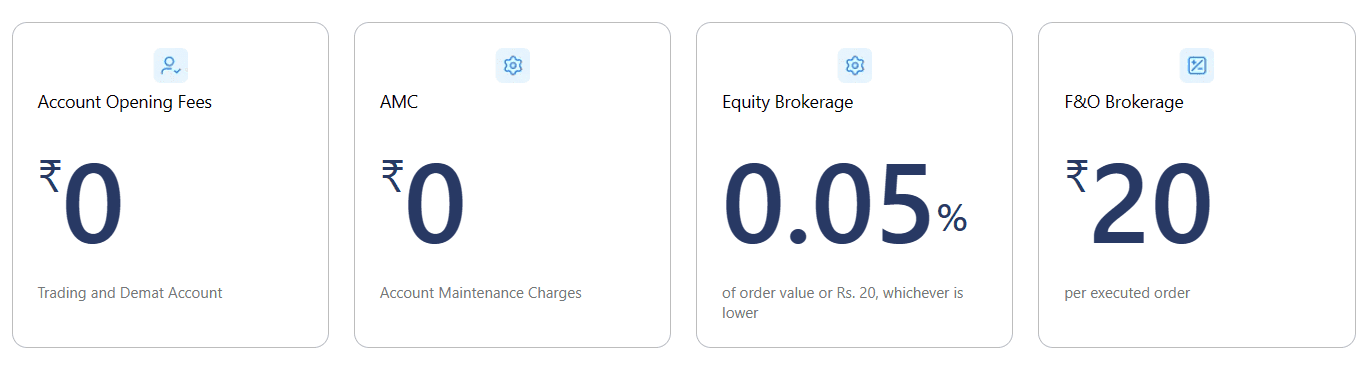
For Annual Maintenance Charges (AMC), Indmoney lists ₹0 (Free for lifetime); Zerodha lists ₹300 + GST/year for non-BSDA resident accounts (₹75/quarter). Informational only; confirm tariffs on each broker's official site before opening an account.
This Indmoney vs Zerodha page is structured as a decision guide, not a promotional ranking. Use the table as a snapshot and validate final tariffs, platform terms, and support policies on each broker’s official site before you trade.
Charges at a glance
| Parameter | Indmoney | Zerodha |
|---|---|---|
| Account Opening Fee | ₹0 | ₹0 |
| Annual Maintenance Charges (AMC) | ₹0 (Free for lifetime) | ₹300 + GST/year for non-BSDA resident accounts (₹75/quarter) |
| Brokerage Plan | INDstocks Indian Stocks pricing | Regular Zerodha online plan |
| Equity Delivery Charges | Lower of ₹20 or 0.1% per executed order; minimum ₹2 | ₹0 |
| Equity Intraday Charges | Lower of ₹20 or 0.1% per executed order; minimum ₹2 | Lower of ₹20 or 0.03% per executed order |
| Equity Futures charges | ₹20 per executed order | Lower of ₹20 or 0.03% per executed order |
| Equity Options charges | ₹20 per executed order | ₹20 per executed order |
Key charge differences
- Annual Maintenance Charges (AMC): Indmoney — ₹0 (Free for lifetime); Zerodha — ₹300 + GST/year for non-BSDA resident accounts (₹75/quarter).
- Brokerage Plan: Indmoney — INDstocks Indian Stocks pricing; Zerodha — Regular Zerodha online plan.
- Equity Delivery Charges: Indmoney — Lower of ₹20 or 0.1% per executed order; minimum ₹2; Zerodha — ₹0.
- Equity Intraday Charges: Indmoney — Lower of ₹20 or 0.1% per executed order; minimum ₹2; Zerodha — Lower of ₹20 or 0.03% per executed order.
- Equity Futures charges: Indmoney — ₹20 per executed order; Zerodha — Lower of ₹20 or 0.03% per executed order.
| Broker | Rematerialization Fee per Certificate | Additional Charges |
|---|---|---|
| Indmoney | INR 250 | Inclusive of Depository charges |
| Zerodha | INR 150 | CDSL charges + INR 100 courier charge |
Indmoney vs Zerodha: Dematerialization Charges
These fees are assessed whenever a request for dematerialization of shares is completed on your behalf. Your physical share certificates may be turned into electronic shareholdings via a process called dematerialization of shares, which is a term that refers to the procedure itself.
- In Indmoney, there is a charge of INR 250 per certificate that is dematerialized, and it includes any expenses that may be incurred by the depository.
- Zerodha charges ₹150 per share certificate for dematerialization, plus a courier charge of ₹100 per dematerialization request and 18% GST.
Deposit via Netbanking on Indmoney and Zerodha
These are the fees associated with the payment gateway, and they amount to:
- Indmoney charges ₹10 for each deposit that is made via Internet banking. (There is no fee for deposits that are carried out via UPI)
- In Zerodha, ₹9 + GST (Not levied on transfers done via UPI)
Indmoney vs Zerodha: Charges for Call and Trade
- Orders that are made via Indmoney support or the trading desk are subject to an additional fee of ₹500 per order. You can place buy and sell orders by calling Indmoney at 07314852026
- Orders placed through a dealer at Zerodha, including orders with auto square-off, are subject to additional fees of ₹50 per order.
Indmoney vs Zerodha: GST charges
This is the tax that the government imposes on services that are provided.
In both Indmoney and Zerodha, brokerage fees, SEBI fees, deposits made via net banking, DP fees, auto-square-off fees, call and trade fees, demat/remat fees, and physical statement fees are all subject to this 18% tax.
Indmoney vs Zerodha: Account Opening Charges
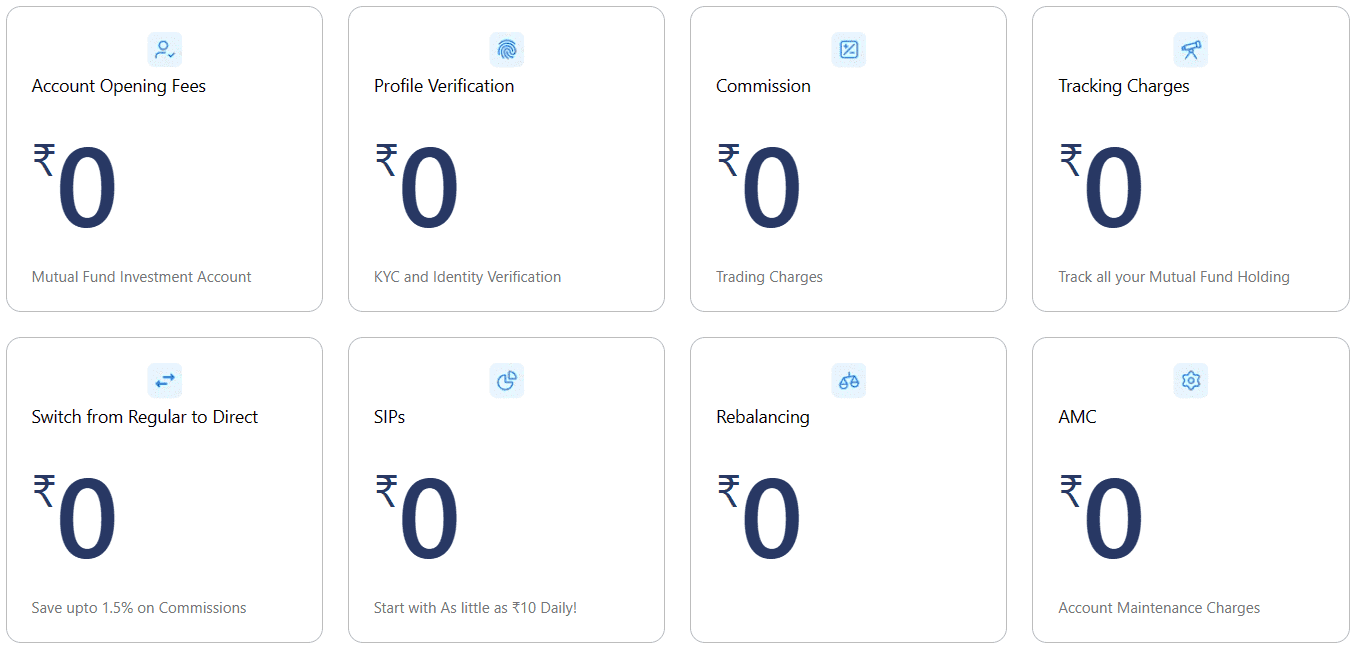
Indmoney charges no account opening fees. Zerodha charges a one-time account opening fee. The fee depends on the type of account you choose, such as an individual account or a corporate account.
| Type of account | Indmoney charges | Zerodha Charges |
|---|---|---|
| Online account | ₹ 0 | ₹ 200 |
| Offline account | ₹ 0 | ₹ 500 |
| NRI account (offline only) | ₹ 0 | ₹ 500 |
| Partnership, LLP, HUF, or Corporate accounts (offline only) | ₹ 0 | ₹ 500 |
Brokerage Charges: Indmoney vs Zerodha
Both Zerodha and Indmoney charge Zero Brokerage for equity delivery. With 0.03%, Zerodha provides the cheapest rate compared to INDmoney which charges 0.05% in intraday and also within the industry.
| Broker | Charge type | Equity delivery | Equity intraday | F&O – Futures | F&O – Options |
|---|---|---|---|---|---|
| Zerodha charges | Brokerage | Zero Brokerage | 0.03% or Rs. 20/executed order, whichever is lower | 0.03% or Rs. 20/executed order whichever is lower | Flat Rs. 20 per executed order |
| Indmoney charges | Brokerage | Zero Brokerage | 0.05% of order value or Rs. 20, whichever is lower | ₹20 per executed order | ₹20 per executed order |
Depository Charges on Zerodha and Indmoney
For Zerodha, there is a simple charge of ₹13.5 + GST per scrip (irrespective of quantity), which is debited from the trading account when stocks are sold. This is charged by the depository (CDSL) and the depository participant (Zerodha).
For Indmoney, the depository charge breakdown is as follows:
| Charge type | Indmoney | Zerodha |
| DP Charges for Delivery (on Sell Orders) | ₹0 Intraday: Buy & Sell | ₹13.5/scrip Delivery Sell |
| Modification in CML | ₹25 per request | |
| Physical Statement Courier | ₹300 per request + ₹300 courier charges | |
| Off-market Transfers from the Demat Account Including the depository transaction charges | ₹10 per transaction | |
| Remat Charges Including the depository transaction charges | ₹250 per certificate | |
| Demat Charges Including the depository transaction charges | ₹250 per certificate |
Indmoney vs Zerodha: AMC Charges
- Indmoney levies an annual maintenance charge to maintain your demat account.
- In Zerodha for the BSDA demat account, there is a zero AMC charge if the holding value is less than ₹50,000. For non-BSDA demat accounts: ₹300/year + 18% GST charged quarterly (90 days).
Also read: HDFC Sky vs Zerodha: Which is better?
Indmoney vs Zerodha: Regulatory Charges
Exchange Transaction Charges for both Buy and Sell:
| Broker | Type of Charge | Equity Delivery | Equity Intraday | Futures | Options |
| Indmoney | Exchange Transaction Charges (Delivery and Intraday for both Buy and Sell) | 0.00325% NSE | 0.00375% BSE | – 0.0019% (on contract value) NSE – 0 BSE | – 0.050% (on premium) NSE – 0.0050%(on premium) BSE |
| Zerodha | Exchange Transaction Charges (Delivery and Intraday for both Buy and Sell) | 0.10% Delivery: Buy and Sell | 0.025% Intraday Sell | NSE: 0.0019% BSE: 0 | NSE: 0.05% (on premium) BSE: 0.005% (on premium) |
Indmoney vs Zerodha: Other Charges
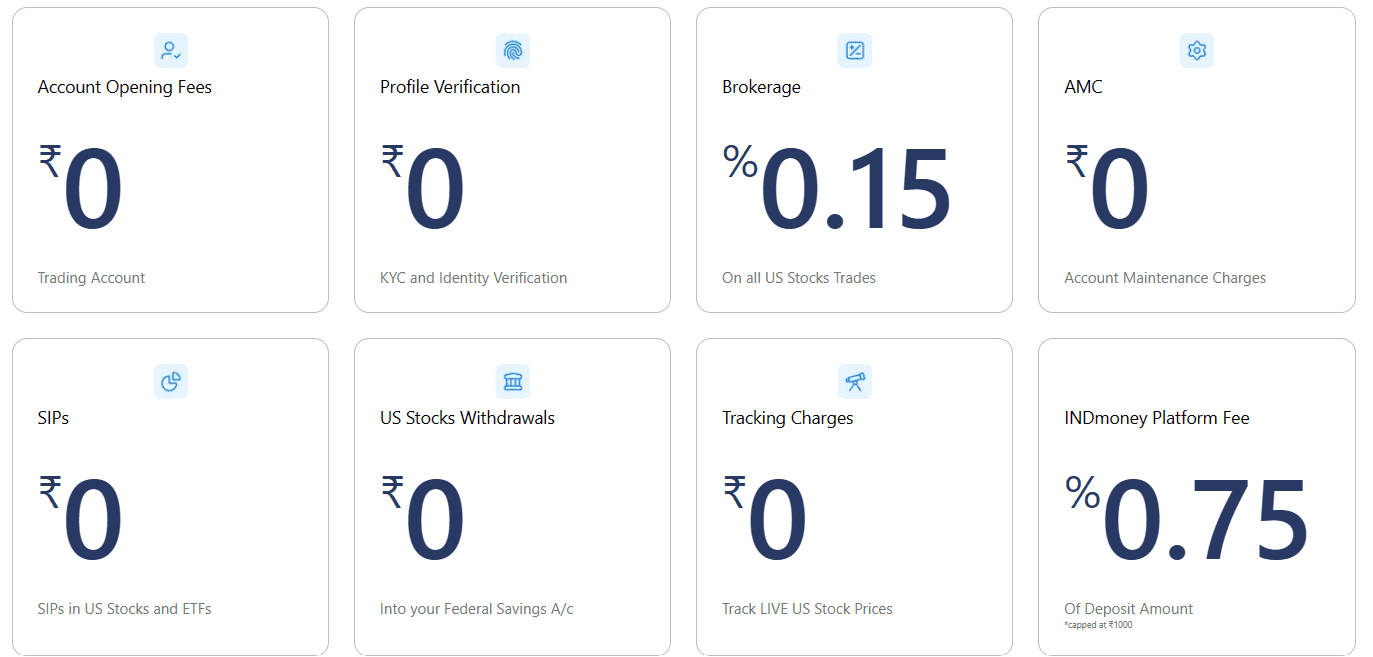
Apart from the account opening charges, brokerage charges, and AMC charges, there might be other costs associated with Indmoney. These could include charges for SMS alerts, transaction statements, physical contract notes, or additional research and analysis tools.
| Type of Charges | Indmoney | Zerodha |
| Deposit using Netbanking | ₹10 | ₹10+GST |
| Auto-square-off charges (For Open intra-day Day Positions) | Rs 20 per position | ₹50 per position |
| Call & Trade charges | ₹500 per order | ₹50 per order |
| GST On Brokerage, DP Charges, Exchange Transaction Charges, SEBI Turnover Charges and Auto Square-off Charges | 18% | 18% |
Example: Zerodha’s All Intraday Equity charges
Consider purchasing 400 shares for 1000 and selling them for 1100.
Charges incurred
| Turnover | 840000 |
| Brokerage | 40 |
| STT total | 110 |
| Exchange txn. charge | 27.3 |
| Clearing charge | 0 |
| GST | 12.11 |
| SEBI charges | 0.99 |
| Stamp duty | 12 |
| Total tax and charges | 202.4 |
| Points to breakeven | 0.51 |
| Net P&L | 39797.6 |
The net profit is 39,976 after all the charges are deducted. Let’s see the charges in detail.
Comparison with other platforms
Zerodha’s cost structure and low brokerage charges have made it a popular choice among traders and investors. However, it’s important to evaluate the overall value proposition, including the platform’s features, customer support, and usability, in addition to charges. Indmoney started Indian stock trading in 2026 and is comparatively new to Zerodha.
Also read: Best app for buying stocks in India
Indmoney and Zerodha charges explained
Exchange Transaction/Turnover Charges
This is charged by the exchange : NSE/BSE; on the value of your transactions executed on the respective exchange.
For NSE,
The charge is 0.00325% of the transaction value for all stocks.

For BSE,
The charge depends on the group of the traded stock, and is as follows :
Stocks part of Group A,B,E,F,FC,G,GC,I, and W are charged @ 0.00375% of transaction value.
Stocks part of Group M,MT,TS,MS,IF,IT, and R are charged @ 0.00275% of transaction value.
Stocks part of Group X,XT,Z are charged @ 0.1% of transaction value.
Stocks part of Group P,ZP are charged @ 1% of transaction value.
Stocks traded under the odd lot mechanism (excluding scrips belonging to M,IF, and IT) are charged @ 1% of transaction value.

DP (Depository Participant) Charges (On Delivery Sell Orders)

This is charged by the depository and depository participant for debiting shares from your demat account and inter-settlement BTST transactions.
This is charged as:
DP charges when buying : ₹ 0
DP charges when selling: ₹ 13.5 + GST per ISIN (stock or ETF) per day, regardless of quantity sold.

Examples to understand how this works?

Example 1: Say you execute 5 delivery sell orders in Stock X in one trading session.
For this activity you will be charged ₹ 13.5+GST.
As in this case you sold only 1 ISIN (Stock X) multiple times, and DP charges depends on the number of unique ISINs sold as delivery orders (in this case 1), regardless of the individual quantity/orders of each ISIN sold.

Example 2: Say you execute 10 delivery sell orders , 3 in Stock X, 5 in Stock Y, and 2 in Stock Z.
For this activity, you will be charges a total of 3*(₹ 13.5+GST).
As in this case you sold 3 ISINs (Stock X, Stock Y,and Stock Z) multiple times, and DP charges depends on the number of unique ISINs sold as delivery orders (in this case 3), regardless of the individual quantity/orders of each ISIN sold.

Securities Transaction Tax (STT)

This is charged by the government when you transact on the exchanges.
Charged as above on both buy and sell orders for equity delivery trades.
Charged as above only for sell order for equity intraday trades.
When trading at INDmoney, STT can be alot more than the brokerage we charge. Important to keep a tab on.

This is charged as:
For equity deliver orders (Buy and Sell) : 0.1% of order amount.
For equity intraday orders (charged only on the sell order) : 0.025% of order amount.
Conclusion
Both platforms publish competitive charge schedules, but totals differ by segment (delivery vs intraday vs F&O) and by whether you value INDmoney’s bundled finance tools versus Zerodha’s long-established Kite stack. Use the table above, then confirm live tariffs on each broker’s official pricing page.
Disclaimer: This article is for education only and is not investment, tax, or legal advice. Broker charges and platform features change — verify on the official site before opening an account.
FAQs
Which broker is cheaper?
Depends on your segment (delivery, intraday, F&O), turnover, and add-ons like AMC. Use the charge tables in this article.
Are these official broker prices?
We compile from public charge sheets and update periodically. Confirm on each broker’s website before trading.
Is this a recommendation?
No. This is an informational comparison, not personalized advice.

Ajay Bohra writes about Demat accounts, trading apps, broker charges, referral offers, and personal finance tools for Indian users. His work focuses on explaining account-opening steps, brokerage structures, platform features, and referral terms in simple language. The content is educational and should not be treated as personalized investment advice.